
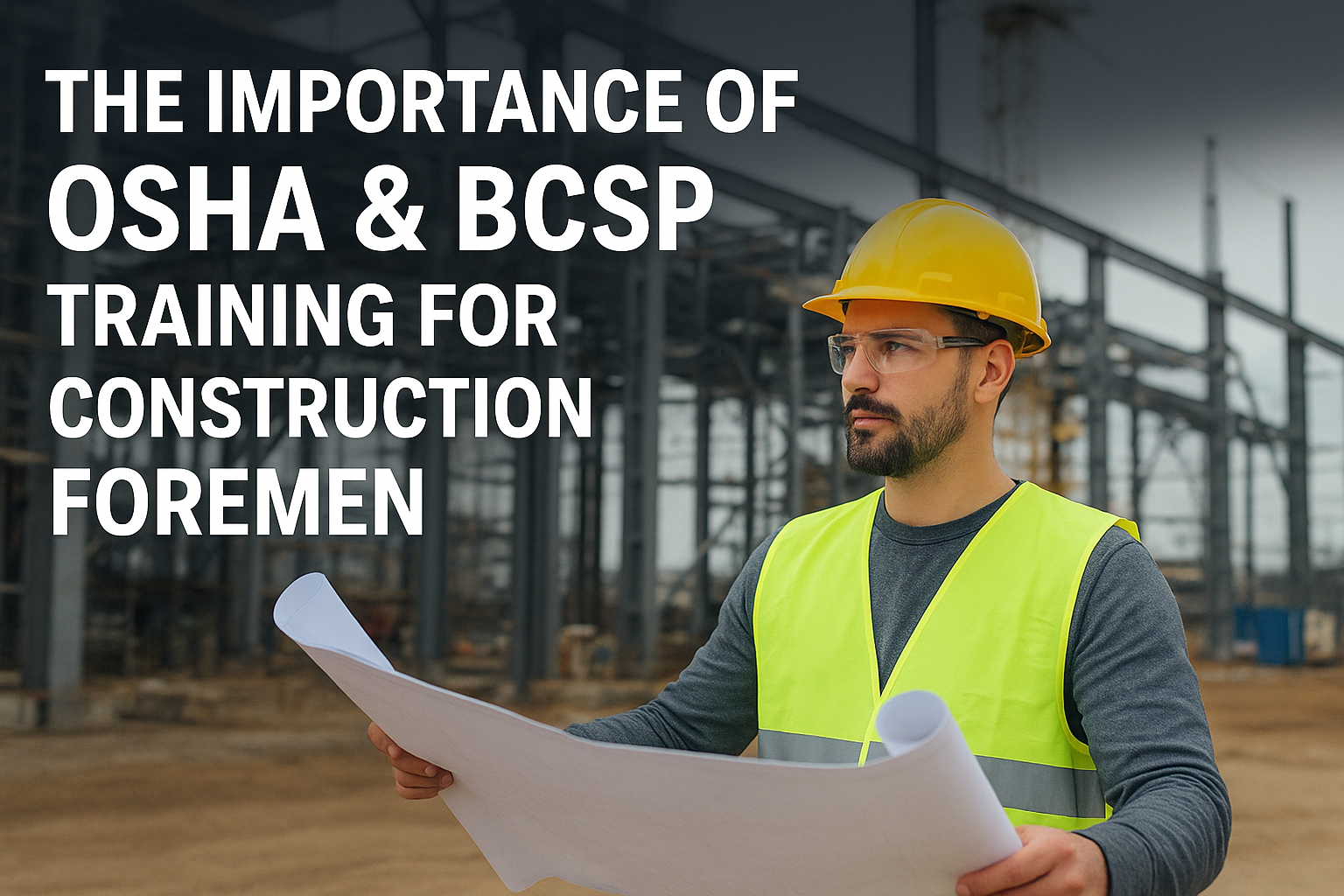
In the world of civil and industrial construction, the foreman is more than just a leader on site — they’re the first line of defense when it comes to safety. Every day, foremen balance production goals, crew management, and client expectations, all while keeping their team safe in high-risk environments. That’s why OSHA and BCSP safety training are no longer optional — they’re essential.
Setting the Standard for Jobsite Safety
A trained foreman does more than enforce rules, they set the tone for the entire crew. When a foreman has completed OSHA (Occupational Safety and Health Administration) training, they understand how to identify, mitigate, and prevent common hazards like:
- Excavation and trenching risks
- Heavy equipment operations
- Electrical and confined space hazards
- Fall protection and scaffolding procedures
This knowledge doesn’t just protect workers; it also builds a safety culture that reduces downtime, prevents violations, and boosts team morale.
The Role of BCSP Credentials
The Board of Certified Safety Professionals (BCSP) offers respected certifications such as the Construction Health and Safety Technician (CHST) or Safety Trained Supervisor (STS). For foremen, earning one of these credentials is a clear signal to employers that they’re committed to a higher level of safety leadership.
BCSP training covers advanced safety principles like risk management, hazard control, and effective communication strategies, all crucial for foremen overseeing multiple trades and subcontractors.
Why It Matters for Civil & Industrial Projects
Civil and industrial projects are complex, high-stakes environments. Whether it’s building infrastructure, managing large concrete pours, or coordinating work around utilities and heavy machinery, the risks are amplified.
A foreman with OSHA and BCSP training can:
- Anticipate potential hazards before they happen
- Coordinate with safety managers more effectively
- Lead toolbox talks that actually engage the crew
- Document compliance in a way that protects both workers and the company
In short: a well-trained foreman makes the entire operation safer, smoother, and more efficient.
Investing in People, Protecting the Future
Companies that invest in training their foremen often see a direct return in fewer incidents, lower insurance costs, and better project outcomes. But beyond the numbers, it’s about building a culture where every worker knows safety is the top priority — from the newest laborer to the most seasoned superintendent.
If you’re a foreman or aspiring to become one, completing your OSHA 30-Hour course and pursuing BCSP certification could be one of the smartest career moves you make.