
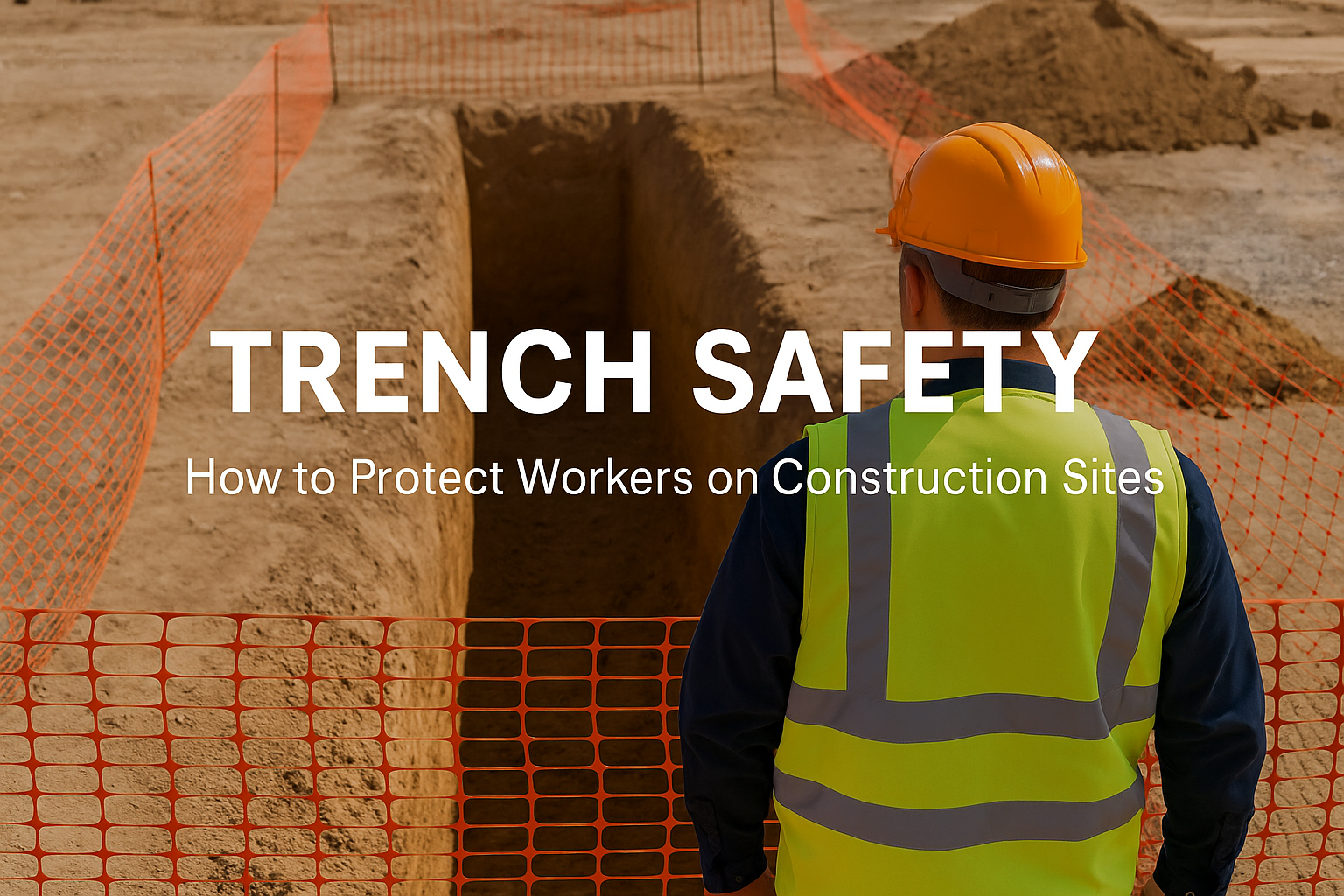
What Is Trench Safety and Why It Matters
Trenching and excavation are routine parts of civil and industrial construction, but they remain among the most dangerous. A cubic yard of soil can weigh as much as a small car—enough to trap or crush a worker in seconds.
Every year, trench collapses lead to serious injuries and fatalities. According to OSHA, most trench-related deaths could have been prevented with proper planning and protective systems.
Common Hazards in Trenching and Excavation
Trenches may look harmless, but they pose multiple risks beyond cave-ins:
- Cave-ins – the most common and deadly hazard
- Hazardous atmospheres – low oxygen or toxic gases
- Water accumulation – flooding and unstable soil
- Falling objects – tools, equipment, or spoil piles
- Worker falls – unsafe access or unprotected edges
OSHA Trenching Requirements
To reduce risk, OSHA provides strict trenching and excavation safety standards:
- Protective Systems: Trenches 5 feet or deeper require sloping, shoring, or shielding, unless in stable rock.
- Competent Person: A trained supervisor must inspect trenches daily and after weather or work changes.
- Safe Access and Egress: Trenches 4 feet deep or more need ladders or ramps within 25 feet of workers.
- Atmospheric Testing: Required when hazardous atmospheres may exist.
- Keep Spoil Piles Back: Store materials at least 2 feet from trench edges.
👉 Following these OSHA trenching requirements isn’t optional—it’s a legal and life-saving necessity.
Best Practices for Trench Safety on Jobsites
In addition to meeting OSHA standards, companies can go further to create safer jobsites:
- Choose the Right Protective System
- Sloping: Cutting trench walls at a safe angle.
- Shoring: Using hydraulic or timber supports.
- Shielding: Installing trench boxes for worker protection.
- Plan Before Digging
Contact 811 to locate underground utilities and plan the excavation safely. - Train All Crew Members
Workers should understand hazards, safety gear, and the reasons behind protective systems. - Inspect Frequently
Conditions change fast—rain, vibrations, or nearby machinery can compromise trench walls. - Empower Workers
No one should enter an unprotected trench. Workers must feel supported to stop unsafe work.
Real-World Example
On too many projects, shortcuts are taken to “save time.” But a single cave-in can halt a project, lead to lawsuits, and cost lives. The real cost of unsafe trenching isn’t just financial—it’s personal.
By investing in protective systems, competent oversight, and a strong safety culture, companies can avoid these tragedies and build reputations as safety leaders.
Conclusion: Safety Below Ground
Trenching is vital to building infrastructure, but it doesn’t have to be dangerous. Following OSHA trenching requirements and applying proven safety practices ensures every worker goes home at the end of the day.
Remember: Trench safety isn’t just compliance—it’s commitment.